

Land Rover Off-Road Capability: Terrain Response Systems and British Columbia Trail Performance
February 27 2026,
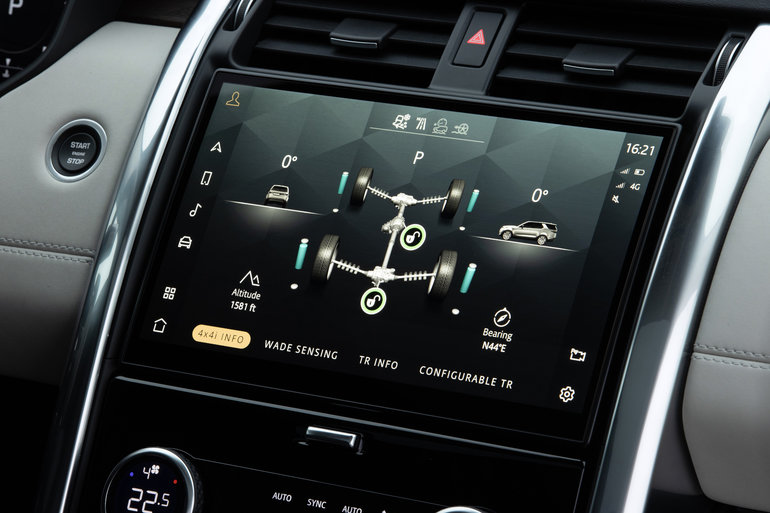
British Columbia's diverse terrain demands more from a vehicle than smooth highway cruising. From rain-soaked coastal trails to snow-covered mountain access roads, drivers across the province encounter conditions that test both capability and confidence. Land Rover's Terrain Response technology reflects decades of engineering focused on one goal: enabling drivers to tackle challenging environments.
The 2026 Discovery demonstrates this approach. Standard Electronic Air Suspension adapts to changing surfaces, while Terrain Response 2 optimizes settings based on real-time conditions. For families exploring provincial parks or adventurers accessing remote coastal areas, these systems transform uncertainty into capability. Understanding how this technology works – and how it performs on actual British Columbia trails – helps explain why Land Rover continues to define the luxury off-road segment.
How Terrain Response 2 Works
Terrain Response 2 functions as an intelligent terrain management system, continuously monitoring wheel slip, steering input, and surface conditions through multiple sensors. The system then adjusts throttle response, transmission behaviour, and traction control settings to match the demands of the current environment.
The Discovery’s implementation includes several selectable modes:
- Grass/Gravel/Snow: Softens throttle response and engages stability control earlier for slippery surfaces.
- Mud and Ruts: Optimizes traction control and throttle mapping for precise control in deep, uneven terrain.
- Sand: Reduces traction intervention to help maintain momentum on loose surfaces.
In Auto mode, the system can select an appropriate setting based on sensor data, reducing driver workload during rapidly changing conditions. This proves particularly valuable on British Columbia's coastal highways, where dry pavement can transition to wet gravel within minutes.
Core Off-Road Systems in the 2026 Discovery
Beyond Terrain Response 2, the Discovery integrates multiple capability features as standard equipment. All Terrain Progress Control can maintain steady forward movement at low speeds – essential for navigating steep, slippery descents common in provincial parks.
Hill Descent Control manages brake pressure automatically on steep inclines. Gradient Release Control helps prevent sudden vehicle movement when releasing the brake on uphill starts. Launch Traction Control optimizes power delivery when accelerating on loose or uneven surfaces, and Hill Launch Assist holds the vehicle momentarily when starting on grades.
The standard All-Wheel Drive system delivers power to individual wheels as needed, working in concert with the Electronic Air Suspension to maintain composure across varied terrain. ClearSight Ground View provides a camera feed showing the area directly ahead of and below the front bumper, which is invaluable when navigating rocky trails or positioning the vehicle over obstacles.
British Columbia Trail Performance
Provincial parks and coastal access routes present specific challenges that highlight the Discovery's engineering. Wet, root-covered forest trails demand traction management that responds to sudden grip changes. Gravel logging roads require suspension travel and underbody protection. Snow-covered mountain access roads test stability systems and power delivery.
The Discovery offers generous ground clearance in its off-road height setting to provide space for ruts and rocks. The Electronic Air Suspension adjusts ride height based on speed and terrain selection. The system can raise the vehicle for increased clearance when crawling over obstacles, then lower it for highway stability and easier entry.
Wading capability extends to 900 millimetres, sufficient for crossing flooded sections of coastal trails or fording streams in backcountry areas. Wade Sensing uses ultrasonic sensors to monitor water depth and warn the driver when approaching maximum recommended levels.
Traction and Stability on Wet Coastal Roads
British Columbia's Pacific coast experiences significant rainfall, creating conditions where traction becomes critical for safety. The Discovery's Dynamic Stability Control system monitors individual wheel speeds, steering angle, and lateral acceleration to detect and correct slides before they become uncontrollable.
When Terrain Response 2 selects Grass/Gravel/Snow mode, the system increases the sensitivity of stability interventions while maintaining enough freedom for controlled slides on loose surfaces. This balance allows experienced drivers to maintain momentum through corners while helping protect against overcorrection or loss of control.
The All-Wheel Drive system can rapidly adjust torque distribution between the wheels, countering understeer or oversteer before it becomes perceptible to the driver. On winding coastal highways where wet pavement meets gravel shoulders, this active torque management helps the vehicle follow the intended line.
Mountain Access and Winter Conditions
Snow-covered access roads to provincial ski areas and mountain trails require different capabilities than coastal routes. The Discovery's Snow-oriented settings adjust throttle mapping to reduce wheel spin when accelerating from stops, while raising the threshold for stability control intervention to allow controlled slides.
Hill Descent Control becomes particularly valuable on steep, icy descents where maintaining a steady speed prevents sliding. The system modulates brake pressure at each wheel independently, maintaining traction even when individual wheels encounter ice patches or loose snow.
All Terrain Progress Control functions as a low-speed cruise control for technical terrain, allowing the driver to focus on steering while the system manages throttle and brake inputs. On narrow, snow-covered forest service roads, this reduces fatigue and improves control during extended off-pavement sections.
Integration with Suspension and Chassis Systems

The Electronic Air Suspension serves multiple functions beyond ride height adjustment. At highway speeds, the system can lower the vehicle to help reduce aerodynamic drag and improve fuel efficiency. When Terrain Response 2 detects off-road conditions, it can raise the suspension to its off-road height and adjust damping rates for improved articulation.
The suspension can independently adjust each corner's damping, helping maintain wheel contact over uneven surfaces while controlling body roll during cornering. This proves valuable on British Columbia's mixed terrain, where transitioning from smooth pavement to rough gravel demands suspension that adapts instantly.
The single-speed transfer box (high range only) provides permanent all-wheel drive. For many of the off-road situations encountered in British Columbia – muddy trails, gravel roads, and snow-covered access routes – high-range four-wheel drive with electronic traction aids is sufficient while maintaining on-road refinement.
Real-World Capability: What the Systems Enable
The combination of Terrain Response 2, Electronic Air Suspension, and active traction management enables specific capabilities relevant to British Columbia adventures. The Discovery can navigate forest trails with deep ruts, using suspension articulation and individual wheel traction control to maintain forward progress where many two-wheel-drive vehicles would become stuck.
Rocky coastal access points require precise wheel placement and underbody clearance. ClearSight Ground View reduces guesswork by showing where the front wheels will track and what lies beneath the vehicle. This proves particularly valuable when navigating boulder-strewn beach approaches or positioning the vehicle over large rocks.
Steep grades – both ascending and descending – become more manageable through the integration of Hill Launch Assist, Gradient Release Control, and Hill Descent Control. The driver can focus on steering and obstacle avoidance while the vehicle helps manage power delivery and braking.
Technology That Adapts to Driver Skill
Terrain Response 2's Auto mode serves drivers with varying off-road experience levels. Novice drivers benefit from automatic mode selection that optimizes settings without requiring detailed terrain knowledge. The system detects surface conditions and adjusts accordingly, helping prevent common mistakes like excessive throttle on slippery surfaces or inadequate traction control in mud.
Experienced drivers can manually select specific modes, tailoring vehicle behaviour to their preferred driving style and the exact conditions encountered. Sand mode, for example, allows more wheel slip to maintain momentum on beaches or dunes, while Mud and Ruts mode provides enhanced traction control for technical obstacles.
The SportShift Selector enables manual gear selection when desired, giving drivers more direct control over engine braking and power delivery during challenging sections. This proves valuable on steep descents where holding a lower gear provides engine braking without relying solely on the brake system.
Safety Systems for Mixed Terrain
The Discovery's safety systems extend beyond traditional on-road features. Anti-lock Braking System (ABS) helps prevent wheel lockup on slippery surfaces, maintaining steering control during emergency stops. Cornering Brake Control distributes braking force based on individual wheel traction, helping prevent slides when braking mid-corner on gravel or wet pavement.
Brake pre-fill can position brake pads closer to the rotors when the system detects potential emergency braking situations, reducing response time. The Electric Parking Brake can automatically engage when the vehicle is switched off on an incline, helping prevent rollback.
Dynamic Stability Control monitors vehicle behaviour continuously, intervening when necessary to help maintain the driver's intended path. The system can be adjusted or disabled for specific off-road situations where controlled slides are useful for maintaining momentum.
Experience Land Rover Capability
The 2026 Discovery demonstrates how advanced off-road technology translates to confidence across British Columbia's diverse terrain. Terrain Response 2 adapts to conditions automatically, while Electronic Air Suspension provides the clearance and articulation needed for challenging trails. From coastal access routes to mountain forest roads, these systems support exploration.
Our team at Land Rover Victoria understands how these capabilities apply to real-world British Columbia adventures. We invite you to experience Terrain Response 2 and the Discovery's integrated off-road systems firsthand, and to discover how technology and engineering create genuine capability for the trails you want to explore.