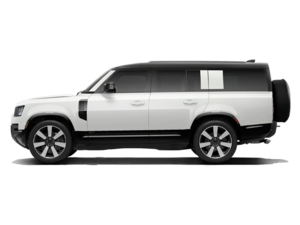

Defender 90 vs. Defender 110 vs. Defender 130: Land Rover's Most Capable SUV in Three Sizes
April 28 2026,
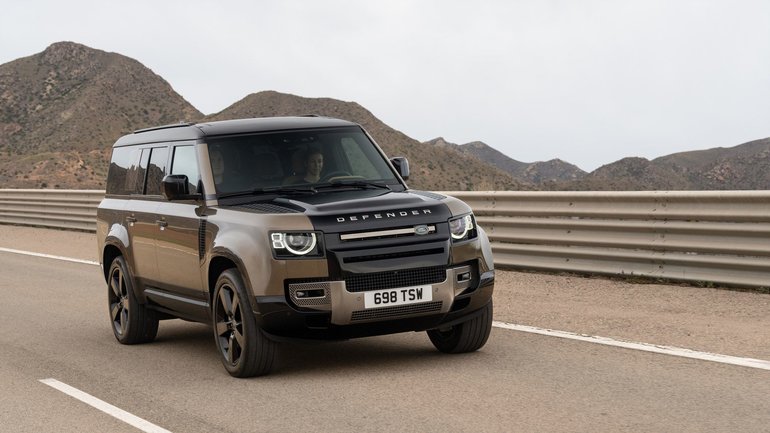
Few nameplates carry the off-road credibility of the Land Rover Defender, and for the 2026 model year, that capability comes in three distinct sizes. The Defender 90, 110, and 130 share the same Terrain Response 2 system, the same twin-speed transfer case, and the same 800 mm wading depth — but each one is shaped for a different kind of driver. Picking between them comes down to how many doors, how many seats, and how much cargo you actually need.
If you're shopping the Defender lineup in Greater Victoria, this guide walks through what separates the three sizes — wheelbase, seating, powertrains, and cargo capacity — so you can match the right Defender to your driveway and weekend plans. The team at Land Rover Victoria has all three on the lot for back-to-back comparison.
At a Glance: How the Three Defenders Compare
|
Feature |
Defender 90 |
Defender 110 |
Defender 130 |
|---|---|---|---|
|
Body style |
2-door |
4-door |
4-door (extended) |
|
Wheelbase |
2,588 mm |
3,023 mm |
3,022 mm |
|
Standard seating |
5 |
5 (7 optional) |
8 |
|
Cargo behind rear-most row |
297 L |
303 L |
433 L |
|
Maximum cargo |
1,651 L |
2,233 L |
2,516 L |
|
Towing capacity |
3,720 kg (8,200 lbs) |
3,720 kg (8,200 lbs) |
3,720 kg (8,200 lbs) |
Defender 90: The Compact, Two-Door Original
The Defender 90 is the shortest and most agile member of the family. With a 2,588 mm wheelbase and a two-door body, it carries the spirit of the original Defender into a modern package — short overhangs, quick steering response, and a footprint that fits city streets and tight forestry roads.
For drivers in Victoria, that compact size pays off in real ways. Parking in downtown Victoria or near the Inner Harbour is easier, and the shorter rear overhang gives the 90 the best departure angle in the lineup for technical terrain around Sooke or the Malahat backcountry. Cargo behind the rear seats measures 297 litres — enough for groceries and gym bags — and folding the rear bench flat opens up 1,651 litres for bikes, kayaks, or surfboards bound for the West Coast.
For the 2026 model year, the Defender 90 comes exclusively with the supercharged 5.0 L V8, producing 493 horsepower and 461 lb-ft of torque. That makes the smallest Defender also the most powerful, paired with full off-road hardware that performance crossovers in the same price range simply don't carry.
- Best for: couples, small families, and drivers who want maximum off-road agility
- Body: 2-door, 5-passenger
- Engine: 5.0 L supercharged V8 producing 493 hp and 461 lb-ft of torque
Defender 110: The Versatile Middle Ground

The Defender 110 is the volume seller for a reason. It adds rear doors, a longer cabin, and the broadest range of trims and powertrains in the family — which makes it the most flexible Defender for buyers who want one vehicle to handle everything from school runs to multi-day overlanding trips.
Standard seating is for five, with 991 mm of second-row legroom — noticeably more than the 90's 930 mm. An optional third row brings total capacity to seven, though those rear seats work best for shorter trips or younger passengers. Cargo flexibility is where the 110 earns its reputation: 303 litres behind the third row, 963 litres with the third row folded, and up to 2,233 litres with both rear rows down. That's enough for a family camping load to Tofino or a dirt bike laid flat in the back.
The 110 is also where the powertrain menu opens up. Buyers can choose the P300 mild-hybrid inline-six (296 hp, 347 lb-ft), the P400 mild-hybrid inline-six (395 hp, 406 lb-ft), or step up to the supercharged 5.0 L V8 producing 493 hp and 461 lb-ft of torque. The 3,023 mm wheelbase keeps highway composure on Highway 1 to Nanaimo while staying nimble on the Pacific Marine Circle Route.
- Best for: families and active drivers who need flexibility from one vehicle
- Body: 4-door, 5-passenger standard with optional third row
- Engines: P300 (296 hp / 347 lb-ft), P400 (395 hp / 406 lb-ft), or 5.0 L V8 (493 hp / 461 lb-ft)
Defender 130: The Eight-Seat Long-Wheelbase
The Defender 130 stretches the formula further. Built on the same wheelbase as the 110 but with a longer rear section, it delivers genuine three-row seating for up to eight — making it the choice for larger families, active groups, or drivers who regularly fill every seat.
The third row in the 130 is the difference. With 975 mm of legroom back there, adults can use those seats on longer drives, where the 110's optional third row works best for shorter hops with younger passengers. Even with all eight seats occupied, you still have 433 litres of cargo space behind the third row. Fold the third row flat and that grows to 1,015 litres; drop both rear rows and the 130 opens up 2,516 litres of usable space, the most of any Defender.
The longer body keeps the off-road tools intact. Electronic air suspension and Adaptive Dynamics come standard, and the twin-speed transfer case with low-range gearing carries over from its smaller siblings. Ground clearance, approach angle, and departure angle all stay competitive enough for technical trails. Engine choices mirror the 110 — P300 inline-six, P400 mild-hybrid inline-six, and the supercharged 5.0 L V8 — paired with an 8-speed automatic transmission and full-time all-wheel drive across the lineup.
- Best for: larger families, sports teams, and drivers who haul people and gear together
- Body: 4-door extended, 8-passenger standard
- Engines: P300 (296 hp / 347 lb-ft), P400 (395 hp / 406 lb-ft), or 5.0 L V8
How to Pick the Right One
Three Defenders, three different priorities. Here's a simple way to narrow it down:
- Choose the 90 if your priority is off-road agility, easier parking around Victoria, and a two-door body. The standard V8 also makes it the performance pick of the three.
- Choose the 110 if you want one vehicle that handles daily life and weekend escapes. Five-passenger comfort, an optional third row, and the widest engine choice make it the most adaptable.
- Choose the 130 if you regularly carry six or more people, need a usable third row for adults, or want the most cargo space in the lineup without giving up Defender capability.
All three keep the features that define the modern Defender: the 13.1-inch Pivi Pro touchscreen, Terrain Response 2, configurable Terrain Response with low-range, wade sensing, and an 800 mm wading depth. The choice comes down to size, seats, and the kind of driving you do most.
Compare All Three at Land Rover Victoria
The fastest way to feel the differences between the 90, 110, and 130 is to drive them back-to-back. Drop by Land Rover Victoria to sit in each one, see how they handle Vancouver Island roads, and walk through trim levels, packages, and finance options with our team. Book your back-to-back Defender comparison at Land Rover Victoria and find the one that fits your driveway and your plans.