

Getting Ready for the Electric Range Rover Era: What Canadian Shoppers Should Know
March 31 2026,
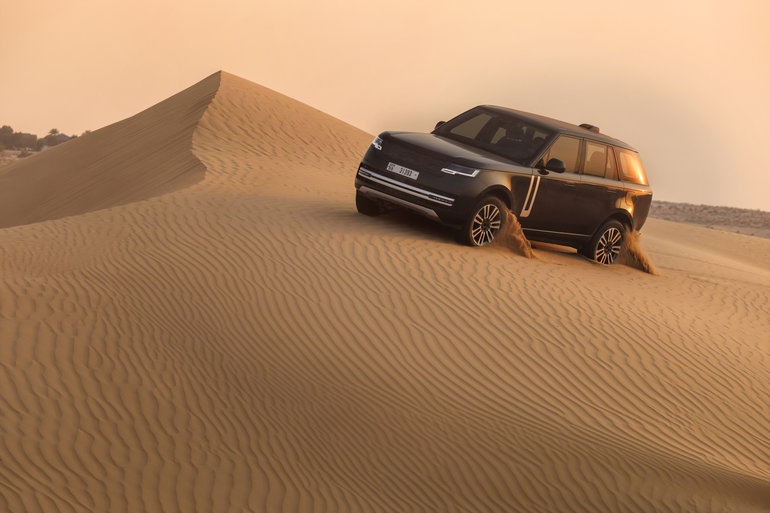
Land Rover’s first fully electric Range Rover models are expected to begin arriving in 2026, marking a significant shift for a brand built on capability and refinement. The upcoming Range Rover Electric and Range Rover Sport Electric are being developed with an advanced 800-volt electrical architecture, powerful dual-motor all-wheel drive and thermal-management systems designed with cold climates in mind, helping preserve range and comfort in Canadian winters.
For shoppers in British Columbia and across Canada who have followed Land Rover’s plug-in hybrid offerings, these new battery-electric models represent the next step in the brand’s electrification strategy, focusing on silent torque delivery, instant response and rapid DC fast-charging under ideal conditions.
What the Electric Range Rover powertrain is expected to deliver
Based on Land Rover’s early communications and industry reporting, the Range Rover Electric and Range Rover Sport Electric are expected to use a module-less battery pack with prismatic NMC cells and a usable capacity in the 100–110 kWh range, with early estimates placing it around 105 kWh. Targeted outputs of around 540 hp in higher-output configurations have been discussed, delivered through individual electric motors that replace the mechanical all-wheel-drive systems found in current combustion-powered models.
This next-generation all-wheel-drive system is being engineered to react far more quickly than traditional ABS-based traction control, with the ability to adjust torque between wheels in milliseconds. That kind of response should help the Electric Range Rover maintain traction on wet, snowy or loose surfaces in ways that align with the brand’s off-road reputation, while also improving on-road stability in challenging weather.
The planned 800-volt architecture is expected to support ultra-fast DC charging, with anticipated peak charge rates of up to around 350 kW on compatible chargers. Under ideal conditions, Land Rover is targeting a 10–80% recharge in roughly 20 minutes, which would place the Electric Range Rover among the quicker-charging luxury SUVs on the market. An electrically operated charge-port door that can be opened via a button, voice command or the key fob is being developed to make access easier in bad weather.
One-pedal driving will be part of the experience, allowing the driver to control speed primarily through the accelerator pedal by increasing regenerative braking when lifting off. This can be particularly helpful in low-speed off-road situations that benefit from precise modulation, and it reduces brake wear in urban driving by converting more kinetic energy back into battery charge.
How ThermAssist addresses winter range concerns
Canadian winters present unique challenges for battery-electric vehicles. Cold temperatures reduce battery efficiency, and heating the cabin can draw significant energy from the pack. Land Rover is developing a system referred to as ThermAssist to manage thermal loads more intelligently, working alongside a heat pump HVAC system and battery preconditioning to help preserve usable range in cold climates.
Heat pump-based HVAC systems are generally much more efficient than traditional resistive heaters because they move heat rather than generating it from scratch, reducing the energy required to warm the cabin. Real-world testing of EVs with heat pumps has shown that they can maintain noticeably more range in cool and cold conditions compared with vehicles that rely solely on resistive heating, particularly around the freezing point and just below.
Battery preconditioning allows the vehicle to warm the pack to its preferred operating temperature while plugged in, shifting the energy demand from the battery to the grid. For Canadian drivers, that means you can preheat the vehicle and battery before departure—especially important in regions such as British Columbia’s interior or the Prairies, where winter overnight temperatures often fall well below –10°C. A properly conditioned battery can also accept higher DC fast-charging rates when you arrive at a public charger, reducing the time spent plugged in on winter road trips.
Independent testing in cold climates consistently shows that EVs can experience a 20–40% reduction in effective range during winter, depending on temperature, speed and climate-control use, with larger losses possible in extreme cold. Land Rover’s goal with systems like ThermAssist and heat pump HVAC is to keep the Electric Range Rover closer to the more favourable end of that range by reducing how much energy is required for cabin and battery thermal management.
Charging infrastructure and trip planning in Canada

The benefits of 800-volt architecture and high-power DC charging depend on the charging network available. Canada has already installed more than 30,000 public EV chargers, with thousands more fast-charging stations funded or under development through federal programs and initiatives. Recent announcements include a $1.5-billion commitment from the Canada Infrastructure Bank to expand charging and hydrogen refuelling infrastructure nationwide, which will support longer-distance EV travel over the coming years.
For Electric Range Rover owners, thoughtful trip planning will be especially important in winter. Canadian EV organizations recommend using apps such as ChargeHub, PlugShare or the vehicle’s built-in navigation to plan DC fast-charging stops, aiming to arrive with around 10–20% state of charge to maximize charging speed. Preconditioning the battery on the way to a DC fast-charging station can help ensure it is warm enough to accept higher charge rates as soon as you plug in.
Level 2 charging at home is expected to remain the most practical daily-use solution for most owners. A 240-volt Level 2 charger can typically add dozens of kilometres of range per hour, allowing a near-empty battery to be recharged overnight. For drivers without access to home charging, public Level 2 stations are increasingly available in urban areas and at workplaces, though charging sessions will take longer than at high-power DC sites.
Canadian pricing for the Range Rover Electric and Range Rover Sport Electric will be announced closer to launch. Shoppers can expect these models to be positioned near today’s top Range Rover trims in the brand’s Canadian pricing hierarchy, reflecting their advanced technology and equipment.
What current plug-in hybrids reveal about the transition
Land Rover’s current plug-in hybrid (PHEV) models across the Range Rover, Range Rover Sport and Defender lineups provide a useful preview of how the brand approaches electrification. These vehicles pair internal combustion engines with electric motors and battery packs large enough to support short electric-only trips, while retaining gasoline power for longer journeys.
The move from PHEV to fully electric power simplifies the mechanical layout by focusing on a single powertrain type, but it also changes how owners plan their driving. Drivers who have grown comfortable with only occasional charging in a PHEV will need to adapt to more regular use of Level 2 or DC fast-charging infrastructure with a fully electric Range Rover. For shoppers in British Columbia, this transition will look different on the coast than in the interior or northern regions, where temperatures can be more extreme and distances between fast-charging sites may be greater.
In milder coastal climates such as the Lower Mainland and Vancouver Island, winter range loss is likely to be more modest, and daily driving can often be handled with overnight home charging and occasional public fast-charging. In regions like the Okanagan or northeastern B.C., owners should plan for more frequent winter charging stops and lower displayed range at departure during cold snaps, especially when using cabin heat aggressively.
Practical steps to maximize winter range
Regardless of the specific electric model, a few practical steps can help Canadian EV drivers get the most from their winter range, and they will apply directly to future Electric Range Rover owners:
- Precondition the cabin and battery while plugged in, ideally 20–30 minutes before departure in very cold weather, so more of the driving energy comes from the grid rather than the battery.
- Use seat and steering-wheel heaters liberally and avoid maximizing cabin heat unless necessary, since localized heating draws far less energy than warming the entire cabin.
- Drive smoothly and maintain moderate speeds; highway speeds of 110–120 km/h with heavy HVAC use consume more energy than travelling at 90–100 km/h with more conservative cabin settings.
- Check tire pressures regularly in winter, as cold temperatures can lower pressure and increase rolling resistance.
- Whenever possible, charge soon after driving in cold weather, while the battery is still warm, to improve charge efficiency and speed.
These habits, combined with Land Rover’s planned thermal-management technologies, will help Electric Range Rover owners feel confident using their vehicles year-round in Canadian conditions.
Our team at Land Rover Victoria can walk you through what is currently known about the Range Rover Electric and Range Rover Sport Electric, explain how they compare with today’s plug-in hybrid and gasoline models, and help you plan for the transition to electric ownership as Canadian infrastructure and incentives continue to evolve.