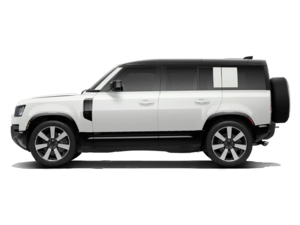

Wet-Season Driving in a 2026 Defender: What Terrain Response and Terrain Response 2 Adjust
October 29 2026,
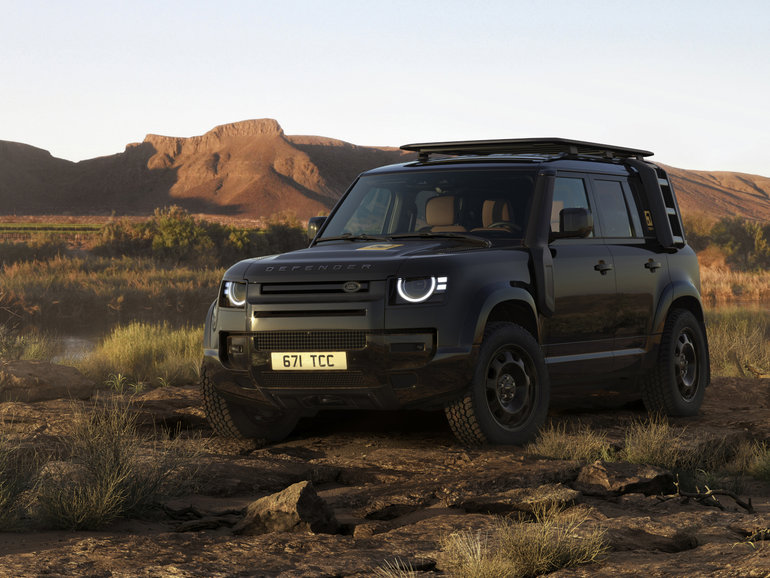
Fall in British Columbia arrives with rain that settles in for weeks at a time. Roads stay damp from the morning commute to the drive home, wet leaves pile up along the shoulders, and the gravel turnoffs that lead to trailheads and cabins turn soft and slick. This is the stretch of the year when a vehicle’s traction hardware stops being a line on a spec sheet and starts doing real work every single day.
The 2026 Defender brings a full set of traction systems to that kind of weather, with Terrain Response at the centre of it all. Depending on the trim, that means either standard Terrain Response or the more advanced Terrain Response 2 with Configurable Terrain Response. Below, we break down what each system adjusts, which standard features handle wet pavement on their own, and how to choose the Defender setup that matches the way you drive through a rainy season.
2026 Defender Traction Systems at a Glance
|
System |
Where You’ll Find It |
What It Does |
|
All-Wheel Drive with twin-speed transfer box |
Every 2026 Defender |
Powers all four wheels, with a low range for steep or loose ground |
|
Terrain Response |
Standard on S and X-Dynamic SE |
Tunes the Defender for the surface you select |
|
Terrain Response 2 with Configurable Terrain Response |
Defender X and Trophy Editions |
Adjusts settings automatically and lets you fine-tune throttle, steering and traction control |
|
Electronic Active Differential with Torque Vectoring by Braking |
Terrain Response 2 trims |
Manages grip between the wheels to keep the Defender tracking cleanly |
|
Stability and traction aids |
Every 2026 Defender |
Dynamic Stability Control, Electronic Traction Control, Cornering Brake Control and more |
What Standard Terrain Response Does
Terrain Response is the Defender’s way of matching its behaviour to the ground underneath it. The driver selects a program suited to the surface, and the Defender adjusts how its drivetrain and traction systems respond. The idea traces back to the earliest Land Rovers, when drivers used levers with red and yellow knobs to switch between two- and four-wheel drive. Today that same job happens through a screen and a few taps.
It helps to be clear about where Terrain Response earns its keep. Its programs are aimed at loose and uneven surfaces such as gravel, mud and snow. On a rain-soaked highway or a wet city street, the everyday work falls to the standard stability and traction systems covered further down. Terrain Response becomes the key tool the moment you turn off the pavement onto a muddy access road, a washed-out driveway or a soft shoulder.
Every 2026 Defender pairs Terrain Response with All-Wheel Drive and a twin-speed transfer box offering high and low ranges. Low range gives the driver finer control at slow speeds, which is useful on steep, slippery ground where smooth throttle inputs matter most.
What Terrain Response 2 Adds

Terrain Response 2 takes the same concept and gives the Defender more say in the process. Land Rover Canada describes it as a system that automatically adjusts the Defender’s settings for optimum power and traction, reconfiguring transmission, suspension and traction settings for the conditions. The driver can still choose a mode directly, but the system is also able to read changing ground and respond on its own.
Configurable Terrain Response goes one step further. It lets the driver fine-tune throttle response, steering and traction control to their own preference, which is useful for drivers who know exactly how they like the Defender to behave on a given surface. The Defender was the first Land Rover to offer Configurable Terrain Response.
Trims equipped with Terrain Response 2 also add hardware that works alongside it:
- Electronic Active Differential with Torque Vectoring by Braking: Helps manage grip between the wheels so the Defender holds its line on slippery surfaces.
- All Terrain Progress Control: Standard on the Trophy Editions, it holds a preset speed off-road by managing engine output and braking, so the driver can focus on steering.
- Adaptive Off-Road Cruise Control: Found on the Defender X, it maintains a steady pace across rough and changing terrain.
- Wade Sensing: Part of the upper-trim equipment, it uses the Defender’s cameras to show water depth when crossing flooded sections.
The Standard Systems Doing the Work on Wet Pavement
On rain-slick asphalt, the systems that matter most come standard on every 2026 Defender. Dynamic Stability Control is designed to keep the Defender on course should one or more tires lose grip on the road surface. Electronic Traction Control limits wheelspin so power reaches the road instead of spinning away on a wet surface.
Cornering Brake Control helps keep the Defender balanced when braking through a bend, which is valuable on curving roads coated in rain and fallen leaves. Low traction launch helps the Defender pull away smoothly from a stop on slippery ground, reducing the chance of wheelspin at an intersection or on a wet boat launch.
Several standard features also help on steep, wet grades. Hill Launch Assist holds the Defender briefly when moving off on an incline, Hill Descent Control manages speed on the way down, and Brake Hold keeps the vehicle stationary in stop-and-go traffic without the driver holding the brake pedal. Roll Stability Control, Electric Power Assisted Steering and Trailer Stability Assist round out the standard list.
Matching the System to the Road

A typical rainy-season week puts a Defender on several different surfaces, and each one calls on a different part of its toolkit.
On wet highways and city streets, standard Dynamic Stability Control, Electronic Traction Control and Cornering Brake Control handle the job, with All-Wheel Drive spreading power across all four tires. No special program is needed.
On leaf-covered side roads and steep residential driveways, low traction launch and Hill Launch Assist help the Defender get moving without slipping, while Brake Hold and Hill Descent Control keep things controlled on the way back down.
On gravel roads, muddy trail access and soft shoulders, Terrain Response steps in. Selecting the right program tells the Defender how to respond to loose ground. On Terrain Response 2 trims, the system can also adjust automatically as conditions shift from one surface to the next.
Which Defender Setup Fits Your Rainy Season
The right Terrain Response setup depends on how often your drive leaves the pavement.
For drivers who spend most of the season on paved roads, the S and X-Dynamic SE trims make a strong case. Every standard stability and traction aid is already on board, along with All-Wheel Drive, a twin-speed transfer box and standard Terrain Response for the occasional gravel road or muddy lot.
For drivers who regularly head down unpaved roads, travel to remote cabins or spend weekends on trails, the Defender X and Trophy Editions deliver the full package. Terrain Response 2 adjusts automatically, Configurable Terrain Response lets you tailor the Defender to your habits, and the Electronic Active Differential adds another layer of grip management when the ground gets unpredictable.
Compare Defender Trims at Land Rover Victoria
Rainy-season driving is where the Defender’s traction systems show their value, and seeing the differences between Terrain Response and Terrain Response 2 in person makes the choice much easier. Stop in at Land Rover Victoria, and our team will walk you through each Defender trim, explain how its traction hardware fits your daily routes, and help you book a test drive.