
Understanding Land Rover Wading Depth: A Victoria Driver's Guide to Wet Season Confidence
December 31 2025,
Living in Victoria means embracing the beauty of British Columbia's coastal climate—and the reality of what locals affectionately call "puddle season." From November through March, when the skies open and rainfall transforms roads into temporary waterways, having a vehicle that can handle more than just a light drizzle becomes essential. Navigating flooded sections of the Pat Bay Highway during a King Tide or crossing a swollen creek on your way to a weekend adventure requires genuine capability.
Land Rover has spent decades engineering vehicles for precisely these conditions. The brand's wading depth technology isn't just for exotic river crossings in distant jungles—it's practical engineering designed for real-world scenarios that British Columbia drivers face regularly. From sudden downpours that overwhelm storm drains to coastal flooding that turns low-lying roads into shallow streams, Land Rover's approach to water management offers peace of mind when weather conditions turn challenging.
What is Wading Depth and Why Does It Matter?
Wading depth refers to the maximum water level a vehicle can safely cross at low speeds without risking damage to critical systems. This measurement runs from the lowest point of the vehicle's underbody to the water surface, accounting for components like the differential, exhaust system, and air intake.
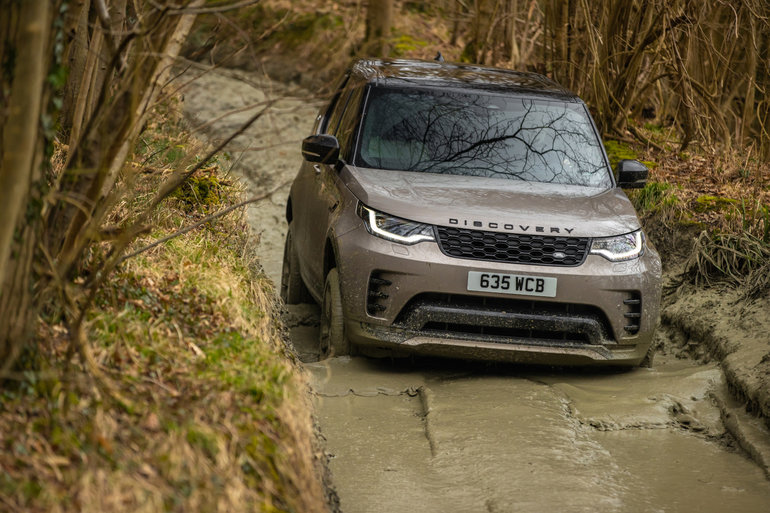
For perspective, most standard SUVs manage around 500 to 600 millimetres of wading depth. Land Rover models take this capability significantly further. The 2025 Discovery achieves 900 millimetres (35.4 inches) of wading depth, providing substantial margin for challenging conditions.
Why does this matter in Victoria? British Columbia's South Island receives between 800 and 1,000 millimetres of annual precipitation, with the heaviest rainfall concentrated in winter months. When atmospheric rivers sweep in from the Pacific, roads can flood quickly. Low-lying areas near the coast experience additional challenges during King Tides, when exceptionally high water levels combine with storm surges to push seawater onto roadways and parking areas.
The Technology Behind the Capability
Land Rover's wading capability relies on integrated systems working together to protect both vehicle and occupants.
Wade Sensing System
Wade Sensing uses ultrasonic sensors to monitor water depth in real-time. As you approach standing water, these sensors measure depth continuously, displaying the information clearly on your dashboard screen. Visual and audible alerts warn you if water depth approaches unsafe levels, removing the guesswork from what can otherwise be an anxious decision.
The 2025 models integrate Wade Sensing with the Pivi Pro infotainment system, providing a clear graphical display that shows water level relative to your vehicle's maximum safe depth. For drivers navigating unfamiliar flooded sections of highway, this real-time feedback proves invaluable.
Terrain Response 2
Land Rover's Terrain Response 2 system optimizes vehicle settings for various driving conditions, including water crossings. The system adjusts throttle response, traction control parameters, and suspension height on equipped models to maintain steady progress through challenging terrain. The Electronic Air Suspension available on Discovery models helps maintain ground clearance when conditions demand it.
Real-World Applications in British Columbia

The engineering behind Land Rover's wading capability translates directly to scenarios that Victoria-area drivers encounter regularly.
Coastal Flooding and King Tides
Several times each winter, King Tides bring exceptionally high water levels to Victoria's coastline. Areas like Dallas Road, parts of the Pat Bay Highway near Sidney, and sections of West Saanich Road can experience temporary flooding. Land Rover's wading capability allows you to maintain your schedule even when other vehicles turn back.
Storm Drain Overflow
Victoria's storm drainage system, while generally effective, can be overwhelmed during intense rainfall events. Intersections in low-lying areas—particularly in older neighbourhoods—can accumulate standing water that reaches surprising depths. The combination of wading capability and All-Wheel Drive traction ensures you can proceed confidently through these temporary obstacles.
Rural and Backcountry Access
For those who venture beyond city limits, British Columbia's backcountry roads present their own challenges. Seasonal creeks that run dry in summer can swell dramatically during winter rains. Forest service roads to hiking trailheads, boat launches, and camping areas often cross these waterways. Land Rover's wading capability means you're not limited to fair-weather adventures—you can access your favourite spots year-round.
Practical Guidance for Safe Water Crossings
Understanding your vehicle's capability is only part of the equation. Safe water crossing requires good judgment and proper technique.
Before entering any standing water, take a moment to assess the situation visually. If possible, observe the depth by watching other vehicles pass through, or use a stick to gauge depth from the roadside. Wade Sensing provides excellent real-time data, but visual confirmation adds an extra layer of safety.
Maintain a slow, steady speed—typically 5 to 8 kilometres per hour—when crossing water. Moving too quickly creates a bow wave that can push water into engine components. Moving too slowly risks stalling in the middle of the crossing. Steady progress is key.
After crossing, test your brakes gently to dry the rotors and restore full braking performance. Water on brake components temporarily reduces stopping power, so a few light applications help restore normal function.
Experience Land Rover Capability in Victoria
Understanding wading depth technology in theory is valuable, but experiencing it firsthand reveals the confidence these systems provide. British Columbia's coastal climate demands vehicles that can handle challenging conditions without compromising comfort or luxury. Land Rover models deliver exactly that combination—capability when you need it, refinement when you don't.
Our team here in Victoria understands the unique driving conditions that British Columbia's South Island presents. From winter storms to summer adventures, we can help you explore which Land Rover model best matches your lifestyle and driving needs. Test drive today to learn more about how these capable vehicles handle everything our coastal climate offers.